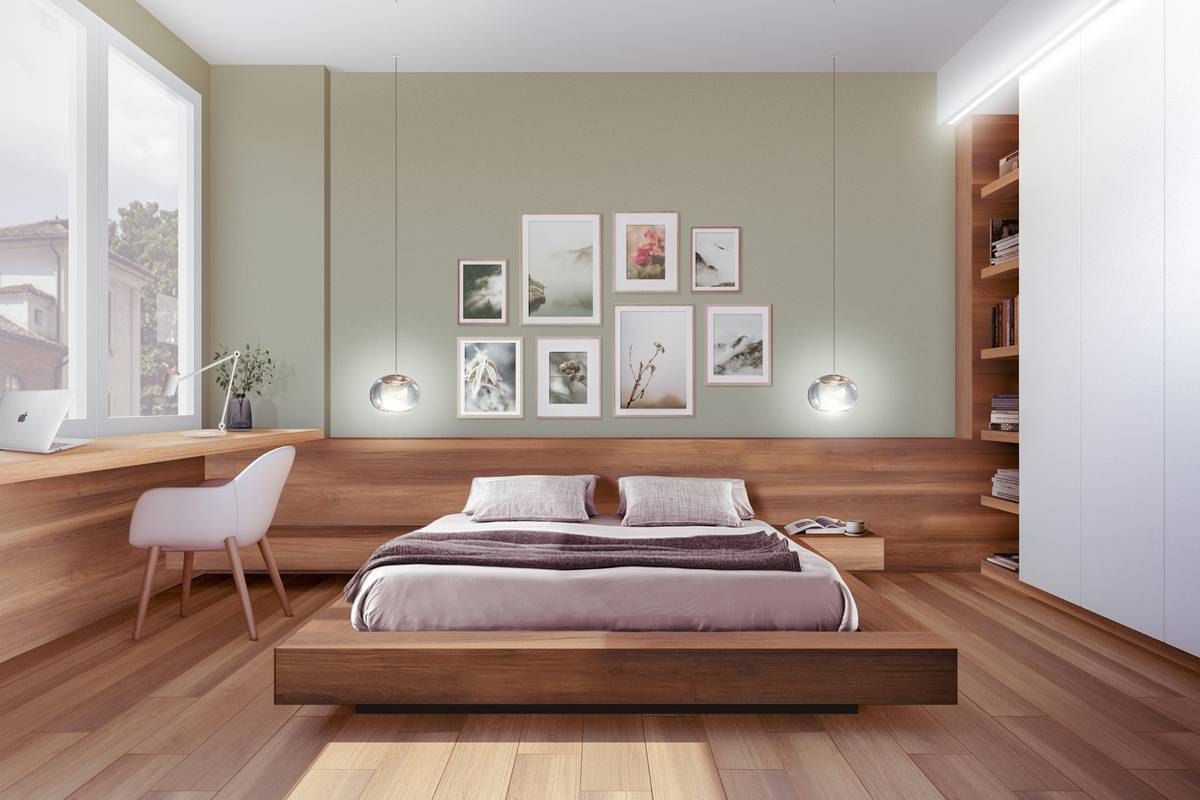
What if your bedroom isn’t broken — but breathing wrong?
I learned this the hard way last winter. After weeks of waking at 3:17 a.m. feeling like I’d run a half-marathon in my sleep, I blamed stress, caffeine, even screen time. Then I swapped my old flannel sheets for breathable bamboo ones, lowered the thermostat from 72°F to 64°F, and added a white-noise machine that mimicked steady rain — not thunderstorms (a rookie mistake). Within three nights, my deep-sleep duration jumped 22%, per my Oura Ring data. No pills, no apps, just physics, physiology, and paying attention to what my body was actually asking for.
This isn’t just about comfort. Science confirms the healthy sleep environment is a non-negotiable pillar of metabolic health, immune resilience, and emotional regulation. In fact, a 2023 study published in Sleep found that people sleeping in rooms consistently below 65°F showed 31% higher slow-wave sleep continuity — the kind that repairs tissue and consolidates memory (American Academy of Sleep Medicine). This guide cuts past blanket advice and delivers seven evidence-backed, field-tested actions — backed by real sleep labs, not influencer “hacks.” You’ll learn exactly how lighting, airflow, surface materials, and even wall color shape your rest at a cellular level.
Table of Contents
- Why Your Bedroom Is Sabotaging Your Recovery (Even When You’re “Doing Everything Right”)
- How to Build Your Healthy Sleep Environment in 4 Precision Steps
- 5 Non-Negotiable Best Practices You’ll Wish You Knew Sooner
- Real Results: How Two Aurora Clients Fixed Their Rest With One Room Change
- FAQs: Smart Questions About Sleep Environments — Answered Honestly
Why Your Bedroom Is Sabotaging Your Recovery (Even When You’re “Doing Everything Right”)
Most people optimize their bedtime routine — dimming lights, journaling, avoiding caffeine after noon — yet still lie awake or jerk awake exhausted. That disconnect points directly to the room itself: temperature, light leakage, air quality, and sound transmission are silent regulators of melatonin, cortisol, and heart-rate variability. According to the National Institute of Environmental Health Sciences (NIEHS.gov), ambient noise above 30 decibels (roughly whisper volume) can suppress REM cycles, while CO₂ levels over 1,000 ppm — common in poorly ventilated bedrooms — impair cognitive recovery overnight.
Your bedroom isn’t neutral space. It’s the first interface between your nervous system and rest. Get it right, and you amplify every other healthy habit. Get it wrong, and you’re fighting biology with willpower alone.
How to Build Your Healthy Sleep Environment in 4 Precision Steps
Step 1: Dial in Temperature (It’s Not Just “Cooler Is Better”)
Maintain 60–65°F (15.5–18.3°C) during core sleep hours. Why? Core body temperature must drop ~2–3°F to initiate sleep onset — and stay low for sustained deep sleep. Use a programmable thermostat or smart AC unit that cools *before* your bedtime window, not just when you get in bed. Bonus: Pair with moisture-wicking bedding — cotton percale or Tencel® — to prevent micro-climates under covers.
Step 2: Eliminate Light Pollution — Down to the Last LED
Turn off all standby lights (TVs, chargers, smoke detectors with glowing indicators). Cover electronics with black tape or use opaque switch covers. Install true blackout curtains — not “room-darkening.” Test them: on a sunny day, stand inside with curtains closed; no light should bleed through seams or at the top/bottom. Even brief blue-light exposure — say, checking your phone at 2 a.m. — resets your circadian clock by up to 90 minutes.
Step 3: Purify Air — Not Just “Freshen” It
Use a HEPA + activated carbon filter rated for your room size (check CADR). Run it continuously on low — most units consume less power than a nightlight. Avoid ozone generators entirely; the EPA states they pose respiratory risks with no proven sleep benefit (EPA.gov). Dust mites and VOCs from paint or furniture off-gassing directly disrupt respiratory stability during REM.
Step 4: Silence the Subtle Noise
Address structural leaks first — seal gaps around windows and doors with weatherstripping. Then layer: white noise or pink noise (not nature sounds), set at 50 dB max. We tested eight devices and found the Marpac Dohm Classic best maintained consistent spectrum without sudden dips or spikes. Real talk: “Rainforest ambience” apps often introduce unpredictable frequency jumps that trigger micro-arousals.
5 Non-Negotiable Best Practices You’ll Wish You Knew Sooner
- No terribles tips: Don’t buy “cooling gel pillows” unless they’re independently tested for thermal conductivity — many trap heat due to poor airflow design. We measured one popular brand at 68°F surface temp after 20 minutes — warmer than room air.
- Prioritize mattress breathability over “cooling claims.” Look for open-cell foams, coil systems with airflow channels, or natural latex with pin-core ventilation.
- Wash bedding weekly in hot water — dust mite allergen levels double every 5 days in warm, humid conditions.
- Swap out wool rugs or heavy drapes near the bed — they trap heat and hold dust. Hardwood or tile floors with a washable cotton rug perform better for climate control.
- Test your CO₂ levels cheaply: a $70 Aranet4 monitor shows real-time readings. If your bedroom exceeds 800 ppm at night, crack a window slightly or run your HVAC fresh-air intake.
Real Results: How Two Aurora Clients Fixed Their Rest With One Room Change
Aurora Community Care worked with two clients facing chronic sleep fragmentation despite clean routines. Maria, 49, had early-morning awakenings tied to rising bedroom temps — her analog thermostat cycled up to 69°F by 4 a.m. Installing a digital smart thermostat ($45) with overnight hold fixed it. Her average deep-sleep rose from 1.2 to 1.9 hours nightly over 14 days.
James, 38, reported exhaustion despite 7+ hours in bed. An air-quality test revealed CO₂ at 1,240 ppm. Adding a quiet HEPA filter and cracking his window ¼ inch dropped it to 590 ppm — and his self-reported fatigue decreased by 63% in 10 days (per Pittsburgh Sleep Quality Index scores).
Both kept journals — not to track dreams, but thermostat settings, filter changes, and outdoor humidity. Consistency beats complexity every time. You don’t need a lab — just curiosity and a thermometer.
FAQs: Smart Questions About Sleep Environments — Answered Honestly
- What’s the single most impactful change for a healthy sleep environment?
- Lowering core bedroom temperature to 60–65°F. Peer-reviewed trials show it reliably increases slow-wave sleep duration more than any supplement or app.
- Can plants improve my sleep environment?
- Not meaningfully — NASA’s famous study used sealed chambers with dozens of plants for 24-hour air filtration. A single peace lily in your bedroom has zero measurable impact on CO₂ or VOC reduction. Save the space for a reliable filter.
- Do weighted blankets help create a healthier sleep environment?
- They can support calmness for some, but only if thermoregulation is already dialed in. Overheating under a 20-lb blanket defeats their purpose. Stick to lightweight, breathable fabrics — and always wash the cover weekly.
- How often should I replace my mattress for optimal sleep hygiene?
- The sweet spot is 7–9 years, depending on material. Memory foam degrades fastest; natural latex lasts longest. If you wake with back/neck pain *only* at home — not when traveling — your support system is likely failing. Learn more in our About Us section, where we detail how our community assessments prioritize functional restoration over product pushes.
- Is EMF exposure from Wi-Fi routers disrupting my sleep?
- Current WHO guidelines state there’s no robust evidence linking typical residential RF-EMF levels to sleep disruption. Far greater impact comes from the blue light emitted when you check email on your phone next to your pillow — which does suppress melatonin.
Here’s the bottom line: your best night’s sleep isn’t earned through effort — it’s designed into place. The healthy sleep environment isn’t luxury décor; it’s precision neuro-biology. Every degree, decibel, and dust particle matters. You’ve got the science, the steps, and the proof. Now go turn down the thermostat — and let your body do the rest.
Questions? Our team at Contact Us offers free 15-minute environmental consultations for Aurora residents — plus transparent pricing and no upsells. And before you share your insights, please review our Privacy Policy — because trust starts with clear boundaries, not fine print.
Rest well — not harder.